For businesses in Nagpur:
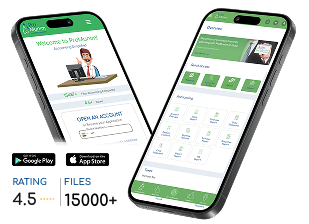
ProMunim provides smart business support for accounting,
CRM, GST billing, compliance, reporting and digital business management.
Businesses, startups, MSMEs and professionals in Nagpur can use ProMunim to simplify daily business operations, improve financial tracking, manage customers, automate billing and stay compliant with Indian business requirements.
Why MSMEs Fail Due to Poor Accounting
India’s Micro, Small, and Medium Enterprises (MSMEs) are considered the backbone of the Indian economy. From manufacturing units and trading firms to startups and service providers, MSMEs contribute significantly towards employment generation and GDP growth. However, despite their importance, a large percentage of MSMEs fail within the first few years of operation.
One of the biggest and most ignored reasons behind MSME failure is poor accounting and financial management.
Most business owners focus heavily on sales, operations, and customer acquisition but ignore bookkeeping, GST compliance, taxation, budgeting, and cash flow monitoring. Eventually, this lack of financial discipline creates operational chaos, legal liabilities, and business instability.
In this blog, we will understand the major reasons why MSMEs fail due to poor accounting practices and how proper accounting can save a business from financial collapse.
1. Lack of Proper Bookkeeping
Many MSMEs still maintain manual records, incomplete entries, or sometimes no records at all. Business owners often depend on memory or informal calculations instead of systematic accounting software.
Without proper bookkeeping:
- Actual profit or loss becomes unclear
- Expenses remain uncontrolled
- Duplicate payments occur
- Outstanding receivables increase
- Business leakages go unnoticed
When financial records are inaccurate, decision-making becomes risky and unreliable.
Proper bookkeeping provides clarity regarding:
- Sales
- Purchases
- Profit margins
- Outstanding debtors
- Vendor payments
- Business liabilities
Without this clarity, businesses operate blindly.
2. Poor Cash Flow Management
A profitable business can still fail because of poor cash flow.
Many MSMEs:
- Give long credit periods to customers
- Receive delayed payments
- Fail to plan monthly expenses
- Ignore tax liabilities
- Overspend during peak seasons
As a result:
- Salaries get delayed
- GST payments remain pending
- Vendor relationships become weak
- EMI defaults increase
- Working capital gets exhausted
Cash flow is the lifeline of every MSME. Businesses that do not track inflows and outflows regularly eventually face financial stress.
3. Non-Compliance with GST and Tax Regulations
GST, TDS, Income Tax, PF, ESIC, ROC, and other statutory compliances are critical for every business.
Many MSMEs fail because:
- GST returns are not filed on time
- Wrong Input Tax Credit (ITC) is claimed
- Notices from departments are ignored
- Reconciliations are not maintained
- Penalties and interest keep increasing
Eventually:
- GST registration gets suspended
- Bank accounts may get attached
- Heavy penalties are imposed
- Business credibility gets damaged
Poor accounting directly impacts compliance management.
Regular accounting helps businesses:
- File returns accurately
- Maintain tax records
- Track liabilities
- Avoid penalties and legal notices
4. No Financial Planning or Budgeting
Many small businesses operate without:
- Budgets
- Financial forecasts
- Expense planning
- Investment planning
- Emergency reserves
This creates unstable business operations.
For example:
- A sudden market slowdown affects liquidity
- Seasonal demand fluctuations create stress
- Unexpected expenses disturb operations
Businesses with proper accounting systems can forecast risks and prepare financial strategies in advance.
5. Mixing Personal and Business Finances
This is one of the most common mistakes among MSME owners.
Business owners often:
- Use business funds for personal expenses
- Deposit personal money without records
- Withdraw cash randomly
- Maintain no owner drawings records
This creates:
- Accounting confusion
- Tax complications
- Unclear profit calculations
- Cash shortages
A business should always maintain separate accounting records and banking systems.
6. Lack of Financial Reports and Analysis
Many MSMEs never review:
- Profit & Loss Statements
- Balance Sheets
- Cash Flow Statements
- GST Reconciliation Reports
- Debtor Aging Reports
Without financial reports:
- Business weaknesses remain hidden
- Loss-making products continue
- Unnecessary expenses increase
- Bad debts grow
Regular financial analysis helps business owners make informed and profitable decisions.
7. Dependency on Unqualified Accounting Practices
Some MSMEs depend on:
- Untrained staff
- Part-time bookkeeping
- Inexperienced accountants
- Unverified tax consultants
Incorrect accounting entries and compliance mistakes later become expensive legal and financial problems.
Professional accounting support ensures:
- Accuracy
- Compliance
- Financial transparency
- Better business decisions
8. Inability to Secure Loans and Investments
Banks and investors require:
- Proper financial statements
- GST returns
- Income tax records
- Profitability reports
- Compliance history
Poor accounting creates the following:
- Loan rejections
- Lower business valuation
- Lack of investor confidence
Businesses with organized accounting systems have better chances of securing the following:
- Working capital loans
- MSME funding
- Startup investment
- Government scheme benefits
9. Inventory Mismanagement
For trading and manufacturing MSMEs, inventory management is extremely important.
Poor accounting often causes the following:
- Excess stock accumulation
- Stock shortages
- Inventory theft
- Wrong valuation
- Dead stock losses
Without proper inventory accounting, businesses lose profitability without realizing it.
10. Lack of Business Scalability
A business cannot grow without proper accounting infrastructure.
When MSMEs expand:
- Transactions increase
- Tax complexity increases
- Payroll increases
- Vendor management becomes difficult
If accounting systems are weak, scaling operations becomes chaotic.
Strong accounting systems create a solid foundation for business growth.
How Proper Accounting Helps MSMEs Succeed
Professional accounting helps MSMEs:
- Maintain financial discipline
- Improve cash flow
- Ensure GST compliance
- Reduce penalties
- Increase profitability
- Improve business valuation
- Build investor confidence
- Make better financial decisions
Accounting is not merely a compliance activity — it is a business growth tool.
Best Accounting Practices for MSMEs
Maintain Digital Accounting
Use professional accounting software instead of manual records.
Perform Monthly Reconciliation
Regularly reconcile:
- Bank accounts
- GST data
- Vendor balances
- Customer balances
Track Cash Flow Weekly
Monitor:
- Receivables
- Payables
- Upcoming liabilities
File GST and Tax Returns on Time
Avoid notices, penalties, and compliance risks.
Hire Professional Accountants
Experienced accounting professionals help businesses stay financially healthy.
Prepare Financial Reports Regularly
Review monthly:
- P&L
- Cash flow
- Balance sheet
- Tax liabilities
Conclusion
Poor accounting is one of the biggest hidden reasons behind MSME failure in India. Businesses that ignore bookkeeping, compliance, taxation, and financial management eventually face operational, legal, and financial crises.
In today’s competitive business environment, proper accounting is not optional — it is essential for survival and growth.
MSMEs that invest in professional accounting systems gain:
- Better financial control
- Improved profitability
- Strong compliance management
- Long-term business stability
A business may survive without aggressive marketing for some time, but it cannot survive long without proper accounting.
Frequently Asked Questions
No FAQs found.