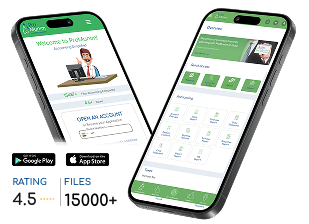
For businesses in Kochi:
ProMunim provides smart business support for accounting,
CRM, GST billing, compliance, reporting and digital business management.
Businesses, startups, MSMEs and professionals in Kochi can use ProMunim to simplify daily business operations, improve financial tracking, manage customers, automate billing and stay compliant with Indian business requirements.
GST Filing Services for MSMEs in India
In today’s highly regulated digital tax environment, GST compliance has become one of the most critical responsibilities for micro, small, and medium enterprises (MSMEs) in India. Whether you are a trader, manufacturer, startup, service provider, e-commerce seller, freelancer, or exporter, timely and accurate GST filing is essential for smooth business operations, uninterrupted Input Tax Credit (ITC), and avoiding penalties.
With increasing automation, AI-based GST scrutiny, e-invoicing regulations, and stricter compliance monitoring in 2026, MSMEs can no longer afford errors in GST return filing. Recent GST reforms are pushing businesses toward real-time compliance and stronger invoice matching systems.
Professional GST filing services help MSMEs manage GST returns efficiently while reducing tax risks, compliance burden, and operational stress.
What Are GST Filing Services?
“GST filing services” refer to professional assistance provided by tax consultants, chartered accountants, GST practitioners, and compliance firms for managing GST-related obligations under the Goods and Services Tax Act.
These services generally include:
- GST Registration
- GST Return Filing
- GSTR-1 Filing
- GSTR-3B Filing
- Annual Return Filing (GSTR-9)
- Input Tax Credit (ITC) Reconciliation
- GST Audit Support
- GST Notice Handling
- GST Refund Processing
- E-Invoicing Compliance
- GST Advisory & Consultancy
- GST Cancellation & Amendment
- GST LUT Filing for Exporters
Why GST Filing Is Important for MSMEs
For MSMEs, GST compliance directly impacts:
- Business credibility
- Vendor trust
- Working capital
- Bank loan eligibility
- Input tax credit claims
- Government tender participation
- MSME registration benefits
- Financial transparency
Incorrect GST filing may lead to:
- Heavy penalties
- ITC blockage
- GST notices
- Interest liabilities
- Suspension of GSTIN
- E-way bill restrictions
- Legal proceedings
Recent GST compliance trends show stricter scrutiny on ITC reconciliation and invoice mismatches.
Major GST Challenges Faced by MSMEs
1. Complex GST Return Filing
Many MSMEs struggle with multiple return formats, such as
- GSTR-1
- GSTR-3B
- GSTR-9
- CMP-08
- GST Annual Returns
2. ITC Reconciliation Issues
Mismatch between:
- GSTR-2B
- Vendor invoices
- Purchase records
- E-invoices
can result in a blocked input tax credit.
3. Frequent GST Law Changes
GST rules are continuously evolving with the following:
- E-invoicing updates
- QRMP scheme changes
- AI-based GST scrutiny
- Real-time invoice matching
4. Late Filing Penalties
Delayed filing attracts the following:
- Late fees
- Interest at 18%
- Compliance notices
5. Lack of Professional Tax Knowledge
Most small business owners focus on operations and sales, making GST compliance difficult to manage internally.
Professional GST Filing Services for MSMEs
GST Registration Services
Businesses exceeding the prescribed turnover limit must obtain GST registration. Professional consultants assist with:
- New GST registration
- Proprietorship GST registration
- LLP GST registration
- Company GST registration
- GST amendment
- GST cancellation
Monthly GST Return Filing
Professional GST experts ensure timely filing of:
GSTR-1
Details of outward supplies and sales invoices.
GSTR-3B
Monthly summary return with tax liability.
GSTR-9
Annual GST return for eligible taxpayers.
QRMP Scheme Filing
Quarterly filing support for eligible MSMEs.
Input Tax Credit (ITC) Reconciliation
ITC reconciliation is one of the most important aspects of GST compliance.
Experts help businesses:
- Match purchase invoices
- Verify supplier compliance
- Reconcile GSTR-2B
- Avoid ITC reversal
- Identify fake invoices
Recent GST reforms have strengthened ITC verification systems and automated scrutiny processes.
GST Filing Process for MSMEs
Step 1 – Collect Accounting Data
Documents required include:
- Sales invoices
- Purchase bills
- Expense records
- Bank statements
- E-way bills
Step 2 – Reconcile Books & GST Data
Tax professionals compare the following:
- Books of accounts
- GST portal data
- Vendor records
- ITC statements
Step 3 – Prepare GST Returns
Experts prepare accurate
- GSTR-1
- GSTR-3B
- Annual returns
Step 4 – Verify ITC Eligibility
Input tax credit validation ensures the following:
- No mismatch
- Proper invoice matching
- Compliance with GST law
Step 5 – File GST Returns Online
Returns are filed through the GST portal before due dates.
Step 6 – Maintain Compliance Records
All filings, challans, and acknowledgements are maintained for audits and future reference.
Benefits of Outsourcing GST Filing Services
1. Error-Free GST Compliance
Professional GST consultants reduce filing mistakes and compliance risks.
2. Better ITC Management
Accurate ITC reconciliation improves cash flow and profitability.
3. Avoid GST Notices & Penalties
Experts monitor deadlines and compliance requirements.
4. Saves Time & Operational Cost
Businesses can focus on growth instead of tax compliance.
5. Professional Tax Advisory
Businesses receive strategic guidance on:
- GST planning
- Tax optimization
- Compliance structuring
Industries That Need GST Filing Services
GST filing services are useful for:
- Retail businesses
- Manufacturers
- Exporters
- Importers
- E-commerce sellers
- Freelancers
- Startups
- Service providers
- Restaurants
- Construction companies
- Logistics companies
- IT companies
- Consultants
- MSMEs
GST Compliance Trends in 2026
India’s GST ecosystem is rapidly moving toward automated and AI-driven compliance systems.
Key developments include the following:
- Real-time invoice reporting
- Expanded e-invoicing
- Automated GST reconciliation
- AI-based fraud detection
- Stricter ITC validation
- Digital audit systems
Businesses that fail to maintain proper GST compliance may face operational and financial challenges.
Why MSMEs Should Hire Professional GST Consultants
Professional GST consultants help businesses:
- File accurate returns
- Reduce tax risks
- Manage GST notices
- Improve ITC utilization
- Maintain audit-ready records
- Stay updated with GST laws
For growing MSMEs, outsourced GST services are often more cost-effective than maintaining an in-house tax department.
How to Choose the Best GST Filing Service Provider
Before hiring a GST consultant, check:
- Experience in GST compliance
- Industry expertise
- Turnaround time
- Technology & software support
- Client reviews
- Notice handling capability
- ITC reconciliation support
- GST litigation knowledge
Why Choose ProMunim of India Pvt. Ltd. for GST Filing Services?
ProMunim of India Pvt. Ltd. provides professional GST filing and accounting services for MSMEs, startups, traders, manufacturers, and service businesses across India.
Our GST services include:
- GST Registration
- Monthly GST Filing
- GST Return Filing
- GST Notice Handling
- GST Audit Support
- ITC Reconciliation
- GST Consultancy
- E-Invoicing Compliance
- GST Refund Services
- Accounting & Bookkeeping
We help businesses maintain accurate compliance while minimizing penalties and tax risks.
Frequently Asked Questions (FAQs)
1. What is GST return filing?
GST return filing is the process of submitting sales, purchases, tax collected, and tax paid information to the GST department.
2. Which GST returns are mandatory for MSMEs?
Common GST returns include:
- GSTR-1
- GSTR-3B
- GSTR-9
- CMP-08
depending on the business category.
3. What happens if GST returns are filed late?
Late filing may result in:
- Late fees
- Interest penalties
- ITC blockage
- GST notices
4. Why is ITC reconciliation important?
Proper ITC reconciliation helps businesses claim accurate tax credit and avoid departmental notices.
5. Can GST consultants help with GST notices?
Yes. Professional GST consultants assist with:
- GST notices
- Reply drafting
- Department representation
- Compliance correction
6. Is GST filing mandatory for small businesses?
If the business exceeds the prescribed turnover threshold or falls under mandatory registration categories, GST filing becomes compulsory.
Conclusion
GST compliance is no longer just a statutory requirement — it is a critical business function for MSMEs in India. With stricter GST regulations, automated reconciliation systems, and AI-driven monitoring, businesses must ensure accurate and timely GST filing.
Professional GST filing services help MSMEs remain compliant, avoid penalties, maximize input tax credit, and focus on business growth.
If you are looking for reliable GST filing services for your MSME business, working with experienced GST professionals can significantly reduce your compliance burden while improving financial efficiency.
Frequently Asked Questions
What are GST filing services for MSMEs?
GST filing services for MSMEs include GST registration, GSTR-1 filing, GSTR-3B filing, annual GST return filing, ITC reconciliation, GST notice handling, and overall GST compliance management for small and medium businesses.
Why is GST filing important for MSMEs?
GST filing is important for MSMEs because it helps maintain legal compliance, claim Input Tax Credit (ITC), avoid penalties, improve business credibility, and ensure smooth business operations.
Which GST returns are mandatory for MSMEs?
The mandatory GST returns for MSMEs generally include:
GSTR-1
GSTR-3B
GSTR-9
CMP-08 (for composition dealers)
depending on the business type and turnover.
What happens if GST returns are not filed on time?
Late GST filing can result in:
Late fees
Interest penalties
GST notices
Blocking of Input Tax Credit (ITC)
Suspension of GSTIN in severe cases
Can MSMEs outsource GST filing services?
Yes, MSMEs can outsource GST filing services to professional GST consultants, Chartered Accountants, or tax firms for accurate compliance and timely return filing.